


Introduction
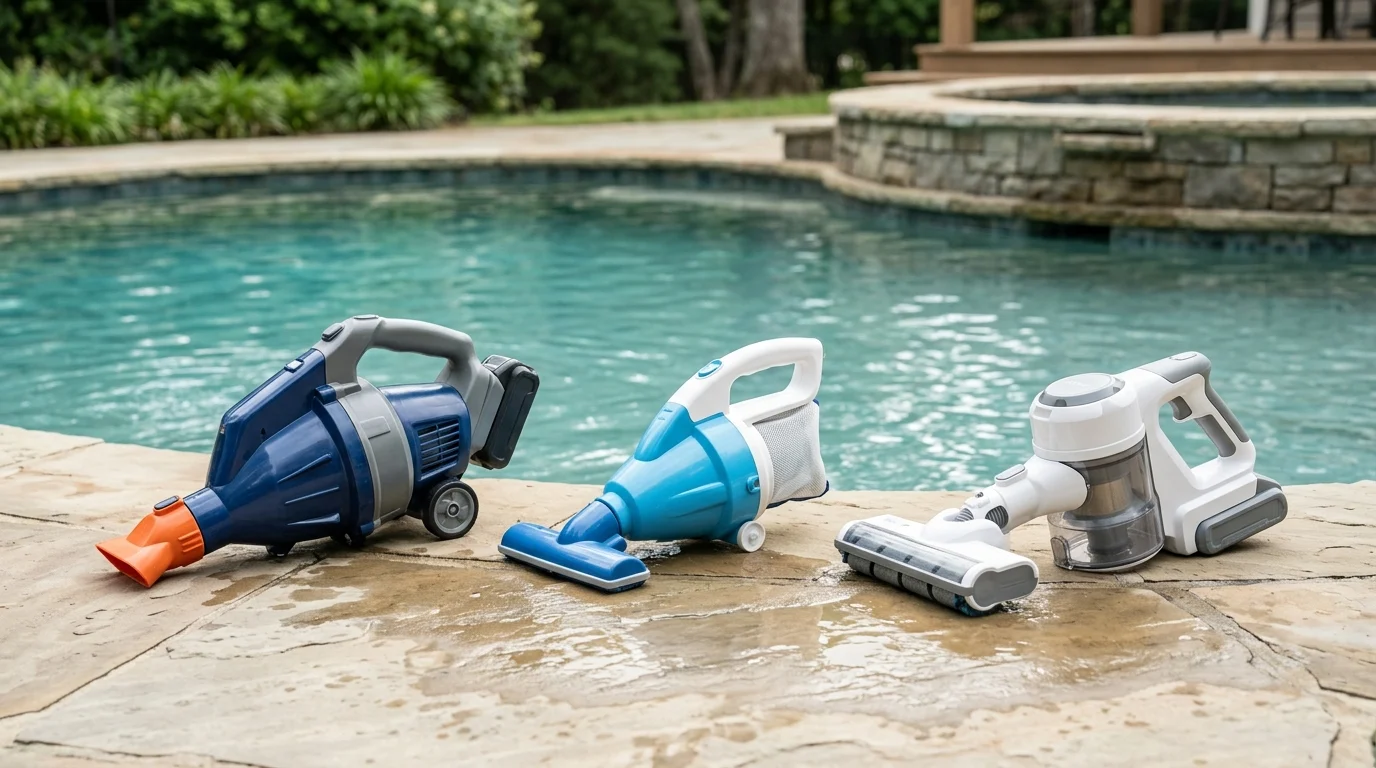
For commercial pool operators, the biggest maintenance challenge is often the time lost between full automated cleaning cycles and urgent spot cleanup needs during active hours. Cordless Handheld Pool Vacuums address that gap by giving staff fast, targeted debris removal without hoses, external pumps, or lengthy setup. This article explains how these units improve labor efficiency, shorten response times, and support cleaner water in high-traffic facilities. It also outlines the practical features that matter most in commercial use, helping readers understand where handheld vacuums fit within a broader pool maintenance strategy.
Why Handheld Pool Vacuums Are Becoming an Efficiency Tool
Commercial aquatic facilities operate under an unforgiving calculus: maintaining pristine water quality while aggressively managing operational overhead. Historically, facility managers have relied on a binary approach to pool maintenance, utilizing either fully automated robotic crawlers for overnight cleaning or cumbersome manual pole-and-hose vacuum setups for spot treatments. However, a critical operational gap exists between these two extremes. Automated robots are inefficient for quick, targeted cleanups during operating hours, and manual systems require excessive setup time. This gap has catalyzed the adoption of commercial-grade cordless handheld vacuums.
Engineered to deliver immediate, localized suction without the logistical drag of hoses or external filtration connections, modern handheld units have transitioned from residential novelties to essential commercial efficiency tools. By integrating advanced lithium-ion battery architectures and high-displacement impellers, manufacturers like Handsome have developed cordless solutions capable of meeting the rigorous demands of continuous commercial use, fundamentally altering the economics of daily pool maintenance.
Labor pressure, turnaround time, and water quality demands
The commercial pool sector is currently navigating unprecedented labor pressures, with facility maintenance wages increasing by 15% to 25% across various metropolitan regions over the past three years. Simultaneously, aquatic centers face high staff turnover, making the operational simplicity of maintenance equipment a primary factor in procurement. Traditional vacuum setups demand specialized training to properly prime hoses and backwash filters, whereas cordless handheld units can be operated effectively by entry-level staff with minimal instruction.
Beyond labor constraints, turnaround time dictates facility profitability and guest satisfaction. In high-traffic environments such as resort pools or municipal aquatic centers, maintenance windows between swim sessions or aquatic fitness classes frequently shrink to 15 or 20 minutes. Relying on a traditional vacuum system, which often requires 10 to 15 minutes simply to deploy and prime, is mathematically incompatible with these tight schedules. Furthermore, stringent health department regulations mandate strict water quality standards, often requiring turbidity levels to remain below 0.5 NTU (Nephelometric Turbidity Units). Achieving this requires immediate removal of introduced organic matter and debris, a task perfectly suited to rapid-deployment handheld systems.
Where cordless handheld vacuums fit in commercial operations
In a comprehensive commercial maintenance strategy, Handheld Pool Vacuums do not replace heavy-duty overnight robotic cleaners; rather, they serve as the critical tactical layer for daytime operations. These devices excel in complex architectural aquatic zones where automated robots frequently struggle or become trapped. Zero-entry wading areas, submerged seating, intricate step formations, and interactive splash pads require precise, human-guided cleaning.
Moreover, cordless handheld vacuums are uniquely positioned to address the continuous influx of environmental debris in outdoor facilities. Wind-blown leaves, localized sand accumulation, and organic matter drop-ins require immediate attention to prevent tannin leaching or localized algae blooms. By deploying a cordless unit, maintenance staff can eliminate targeted debris zones in under five minutes, returning the pool to optimal aesthetic and hygienic conditions without closing the area to patrons or deploying hazardous trailing hoses across active pool decks.
What Defines a Commercial-Grade Handheld Pool Vacuum
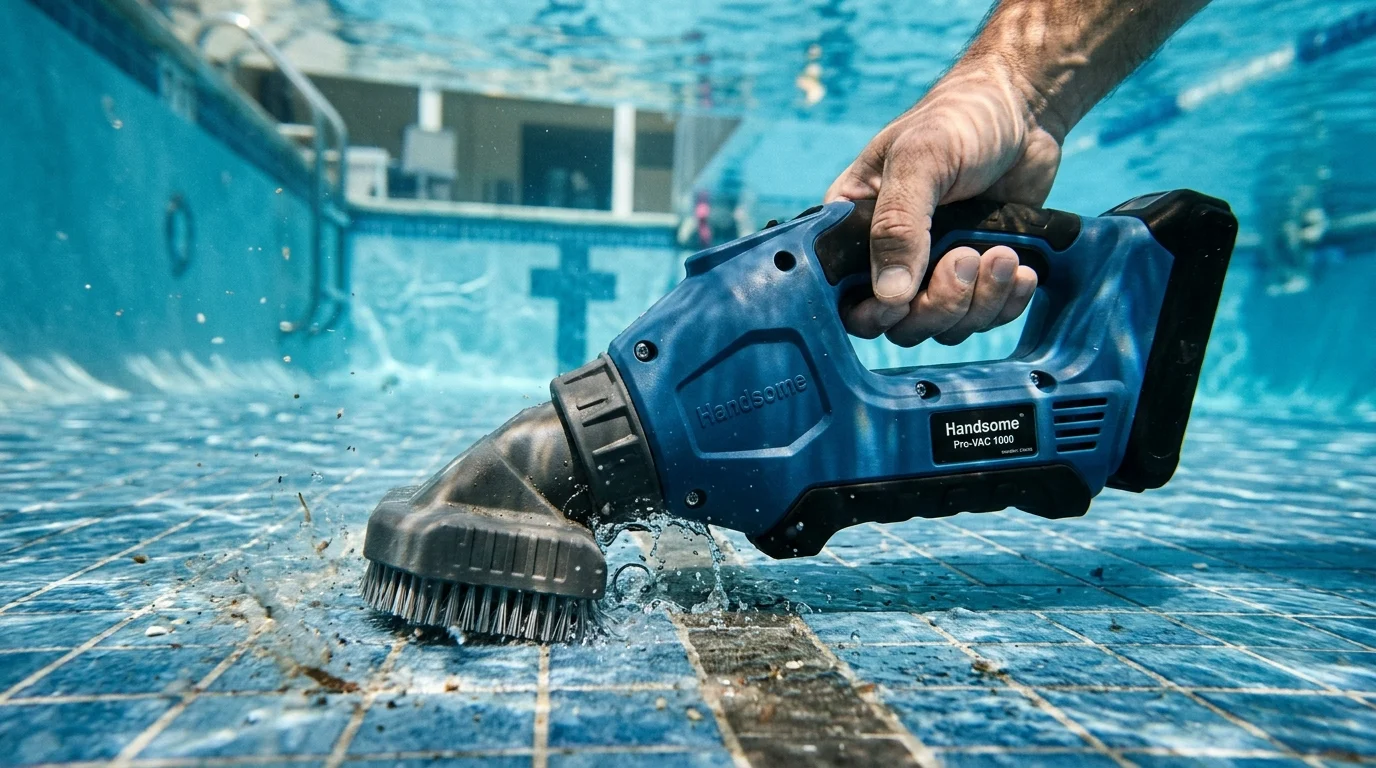
Not all battery-operated vacuums are equipped to survive the punishing environment of a commercial aquatic facility. The distinction between a high-end residential unit and a true commercial-grade handheld pool vacuum lies in the internal engineering tolerances, material science, and sustained performance metrics. Commercial buyers must look past superficial design elements and critically evaluate the electromechanical specifications that dictate a unit's lifecycle and operational efficacy.
A commercial-grade unit must withstand constant exposure to corrosive water chemistry, including elevated chlorine levels, ozone treatments, and fluctuating pH balances. This requires marine-grade stainless steel hardware, UV-resistant polycarbonate or ABS polymer housings, and hermetically sealed motor compartments rated to strict ingress protection standards.
Key technical criteria for commercial cordless models
The foundational technical criterion for any commercial cordless vacuum is its motor and battery architecture. Commercial models rely exclusively on brushless DC (BLDC) motors, which eliminate the physical friction of carbon brushes, thereby reducing heat generation and extending the Mean Time Between Failures (MTBF) to well over 1,000 operational hours. This motor must be housed within a chamber that achieves an IP68 waterproof rating, ensuring complete protection against continuous submersion at specified depths.
Battery chemistry is equally critical. Commercial units utilize advanced lithium-ion (Li-ion) or lithium iron phosphate (LiFePO4) cell arrays, typically operating between 11.1V and 14.8V with capacities exceeding 4,000 mAh. This high energy density is required to sustain the torque necessary for moving dense volumes of water and heavy particulate matter, such as wet sand or pebbles, without experiencing voltage sag as the battery depletes. Additionally, the integration of smart Battery Management Systems (BMS) prevents thermal runaway, overcharging, and deep discharge, which are common failure points in lower-tier consumer models.
How to compare suction, debris capacity, runtime, and charging
When comparing specific models, procurement officers must evaluate four primary quantitative metrics: suction flow rate, debris capacity, sustained runtime, and charge cycle duration. Suction is typically measured in Gallons Per Minute (GPM) or liters per minute. A commercial-grade unit must deliver a minimum flow rate of 15 to 25 GPM to effectively capture heavy debris and generate sufficient fluid dynamics to pull in adjacent suspended particulates.
Debris capacity dictates operational efficiency by determining how long a user can vacuum before halting to empty the filter. Commercial models should feature a minimum debris chamber volume of 2.0 to 3.5 liters. Runtime and charging metrics define the unit's duty cycle. A benchmark commercial unit offers 60 to 90 minutes of continuous runtime at peak suction, paired with a rapid-charge system capable of restoring 100% battery capacity in 2 to 4 hours.
| Specification Metric | Standard Residential Model | Commercial-Grade Standard | Operational Impact |
|---|---|---|---|
| Suction Flow Rate | 5 - 10 GPM | 15 - 25+ GPM | Dictates ability to lift heavy debris like wet sand or coins. |
| Debris Capacity | 0.5 - 1.0 Liters | 2.0 - 3.5 Liters | Reduces frequency of interruptions to empty the filter chamber. |
| Battery Capacity | 2,000 mAh | 4,000 - 6,000+ mAh | Ensures sustained torque and prevents voltage sag during use. |
| Continuous Runtime | 30 - 45 Minutes | 60 - 90 Minutes | Allows for multi-pool servicing on a single charge. |
| Ingress Protection | IPX7 or IP67 | IP68 | Guarantees survival under continuous, deep submersion. |
How Cordless Handheld Pool Vacuums Compare with Manual Cleaning
The traditional method of manual pool cleaning—involving a telescopic pole, a vacuum head, a corrugated hose, and a direct connection to the pool's skimmer or a dedicated suction line—has been the industry standard for decades. However, when benchmarked against modern cordless technology, the manual method reveals significant inefficiencies in labor utilization and operational agility.
Transitioning to cordless handheld systems represents a fundamental shift in how maintenance hours are allocated. By eliminating the reliance on the pool's primary filtration pump, facilities can decouple spot-cleaning tasks from the mechanical room's operational schedule, resulting in a highly flexible, decentralized maintenance protocol.
Cost, coverage, speed, and usability trade-offs
The most glaring trade-off between manual and cordless cleaning lies in setup and teardown times. A standard manual vacuum deployment requires approximately 10 to 15 minutes of non-value-added labor: uncoiling the hose, submerging it to bleed trapped air, connecting it to the suction port, and securing the vacuum head. Following the cleaning session, another 10 minutes is spent draining the hose, coiling it, and backwashing the pool's primary filter to remove the newly introduced debris. In contrast, a cordless unit boasts a setup time of exactly zero minutes; it is instantly ready for deployment.
From an ergonomic standpoint, dragging a water-filled, 30-foot corrugated hose creates significant drag resistance, increasing the physical strain on maintenance personnel by an estimated 40% to 50% compared to maneuvering a self-contained cordless unit. While manual setups may still hold an advantage for comprehensive, wall-to-wall vacuuming of massive Olympic-sized basins due to infinite runtime, cordless units dominate in targeted coverage speed. A cordless vacuum allows an operator to navigate directly to a debris cluster, remove it, and exit the water in a fraction of the time it takes to simply prime a manual hose.
| Operational Factor | Manual Pole & Hose Vacuum | Cordless Handheld Vacuum | Commercial Advantage |
|---|---|---|---|
| Setup/Teardown Time | 20 - 30 minutes per session | < 1 minute | Recovers hundreds of labor hours annually. |
| Ergonomic Strain | High (water-filled hose drag) | Low (hydrodynamic design) | Reduces operator fatigue and potential injury. |
| Filtration Dependency | Relies on primary pool pump | Self-contained micro-filtration | Prevents primary filter clogging and backwashing. |
| Deck Safety (Trip Hazard) | High (trailing hoses on deck) | Zero | Enhances patron safety during active hours. |
Best-fit commercial settings for handheld pool vacuums
The operational profile of a cordless vacuum makes it the optimal choice for specific commercial aquatic environments. High-end resorts and boutique hotels, where aesthetic perfection is required continuously throughout the day, benefit immensely from the discreet nature of cordless vacuums. Maintenance staff can perform spot cleanups without disrupting lounging guests with noisy pumps or unsightly equipment.
Furthermore, these units are indispensable as a Spa Vacuum Cleaner for Medium Pools and elevated hot tubs. Spas frequently feature complex seating arrangements, multiple jets, and limited deck space, making hose deployment exceptionally difficult and visually disruptive. Municipal aquatic centers with interactive splash pads or zero-depth entry child zones also represent ideal use cases, as these shallow areas lack the water depth necessary to properly prime a traditional manual hose system.
How Commercial Buyers Should Evaluate Deployment and Total Cost
Procuring commercial-grade handheld pool vacuums requires a strategic evaluation of the Total Cost of Ownership (TCO) rather than simply comparing initial purchase prices. While a high-capacity commercial cordless unit carries a higher capital expenditure than a standard manual vacuum head and hose, the return on investment (ROI) is realized rapidly through labor savings, reduced chemical consumption, and minimized wear on primary filtration infrastructure.
Facility managers must implement a structured deployment strategy to maximize these financial benefits. This involves integrating the new equipment into daily standard operating procedures (SOPs), establishing dedicated charging protocols, and ensuring that all maintenance personnel understand the specific operational parameters of battery-powered aquatic tools.
Implementation steps for training, charging, and staff adoption
Successful deployment begins with streamlined staff training. Because cordless vacuums eliminate the complex fluid dynamics associated with priming hoses and managing pump valves, training an employee to use a Cordless Vacuum typically requires less than 10 minutes. The focus of this training shifts from operational mechanics to best practices for battery management and filter maintenance, such as ensuring the unit is fully submerged before activating the impeller to prevent motor cavitation.
Establishing a secure, dry, and climate-controlled charging station is a critical implementation step. Lithium-ion batteries degrade rapidly if charged in extreme heat or direct sunlight. Facilities should designate a specific area in the maintenance room for charging docks, implementing a strict "return and plug-in" policy at the end of every shift. By purchasing models with interchangeable battery packs, high-volume facilities can maintain continuous operational readiness, swapping a depleted 4,000 mAh pack for a fully charged one in seconds.
Compliance, safety, durability, and return on investment
From a risk management and compliance perspective, cordless vacuums offer a substantial safety upgrade. The Occupational Safety and Health Administration (OSHA) and equivalent international bodies frequently cite slip, trip, and fall hazards as the leading cause of injury in aquatic facilities. By removing 30 to 50 feet of trailing vacuum hose from the wet pool deck, facilities instantly mitigate a severe liability risk for both patrons and staff.
Calculating the financial ROI provides a compelling justification for deployment. Consider a commercial facility paying a maintenance technician $22 per hour. If the transition to cordless vacuums saves 45 minutes of setup, teardown, and backwashing time per day, the facility recovers $16.50 daily, or approximately $6,022 annually. Given that a premium commercial handheld vacuum typically costs between $400 and $800, the break-even point is achieved in under two months. Furthermore, by capturing fine particulate matter (down to 50 microns) in the handheld unit's reusable filter, the facility reduces the frequency of primary filter backwashing, conserving thousands of gallons of heated, chemically treated water annually.
How to Choose the Right Handheld Pool Vacuum
Selecting the ideal Handheld Pool Vacuum requires aligning the device's technical specifications with the unique environmental and architectural realities of the specific aquatic facility. A unit optimized for a small, indoor hydrotherapy clinic will not possess the debris capacity or flow rate required for a sprawling outdoor resort pool surrounded by deciduous trees.
Therefore, commercial buyers must approach procurement analytically, creating a matrix of their facility's specific challenges—ranging from prevalent debris types to available maintenance windows—and matching those variables against the performance data of prospective vacuum models.
How to match vacuum models to facility needs
The first step in matching a vacuum to facility needs is analyzing the predominant particulate matter entering the water. Outdoor pools facing heavy organic loads (leaves, twigs, pine needles) require vacuums with wide suction throats (minimum 6 inches) and high-volume, standard-mesh filter bags (typically 200 to 250 microns) capable of holding 3.0 liters or more without clogging. Conversely, indoor pools or facilities situated in coastal/desert regions struggle primarily with fine silt, sand, and dead algae. These environments demand vacuums equipped with micro-filtration cartridges or ultra-fine bags rated down to 50 microns, paired with high-velocity impellers to lift dense, compacted sand from the pool floor.
Pool geometry also dictates the physical design of the ideal vacuum. Facilities with extensive zero-entry zones or shallow splash pads require units designed to operate in water depths as low as 8 to 10 inches without drawing air into the motor. Additionally, the availability of specialized attachment heads—such as angled brush nozzles for cleaning tight 90-degree corners or wide-sweep heads for rapid floor coverage—should directly correlate to the architectural complexity of the pool basin.
A framework for vendor evaluation and pilot testing
Once technical requirements are established, procurement officers should execute a structured vendor evaluation. This begins with scrutinizing the commercial warranty. A reputable manufacturer of commercial-grade Pool Cleaning, Efficiency Boost equipment will offer a minimum 1-year to 2-year warranty that explicitly covers commercial, daily-use applications, unlike consumer warranties which are voided by high-frequency usage. Furthermore, buyers must verify the supply chain reliability for consumable parts, ensuring that replacement filter bags, battery packs, and brush bristles are readily available with minimal lead times.
Finally, large facilities or municipal districts should insist on a pilot testing phase before committing to a fleet-wide purchase. A standard 14-day to 30-day pilot program allows maintenance staff to test the vacuum against real-world facility conditions. During this pilot, management should track specific quantitative metrics: the exact reduction in daily cleaning time, the frequency of battery depletion before shift completion, and the durability of the unit's housing against standard poolside impacts. Only when a unit demonstrably lowers the facility's localized cleaning times while maintaining strict water clarity standards should it be integrated into the permanent maintenance arsenal.
Key Takeaways
- The most important conclusions and rationale for Handheld Pool Vacuums
- Specs, compliance, and risk checks worth validating before you commit
- Practical next steps and caveats readers can apply immediately
Frequently Asked Questions
Why are cordless handheld pool vacuums useful in commercial facilities?
They handle fast spot cleanups during operating hours without hoses, priming, or external filtration, helping staff remove debris in minutes and reopen areas quickly.
Can a handheld pool vacuum replace an overnight robotic cleaner?
No. Use it as a daytime tactical tool for localized debris, steps, shallow entries, and splash zones, while robots remain best for full-pool overnight cleaning.
What features define a commercial-grade handheld pool vacuum?
Look for a BLDC motor, IP68 waterproof sealing, lithium-ion battery, corrosion-resistant hardware, and durable UV-resistant housing for frequent commercial use.
Where does a cordless handheld vacuum work better than automated robots?
It performs best on stairs, zero-entry areas, submerged seating, tight corners, and splash pads where robots may miss debris or get stuck.
How quickly can staff deploy a cordless handheld pool vacuum?
Typically in under a minute, since there are no hoses to connect or prime. That makes it practical for 15–20 minute maintenance windows between sessions.