


Introduction
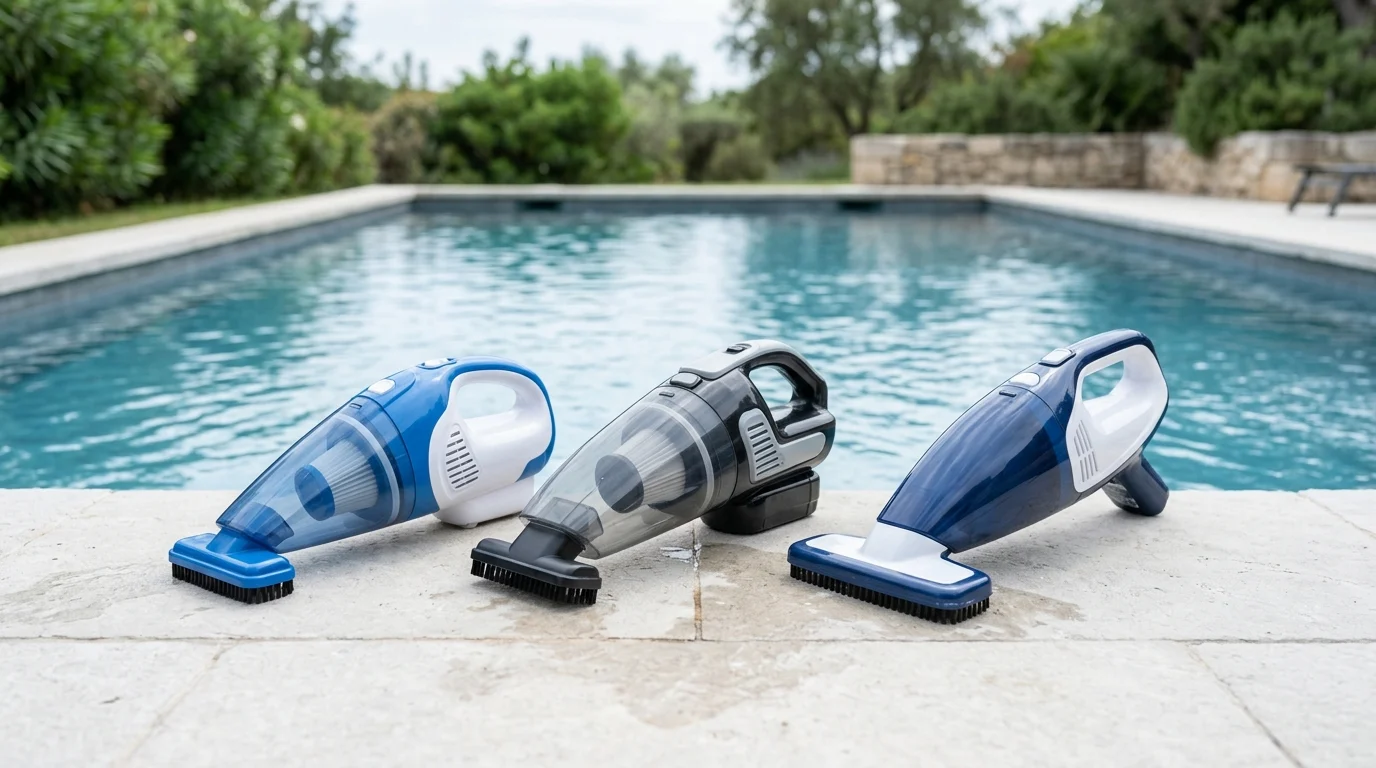
As demand shifts toward portable, battery-powered pool cleaning, Handheld Pool Vacuums have become a practical growth category for distributors, importers, and private label brands serving diverse markets. This article examines how Handsome Pool supports global partners beyond product supply, from scalable manufacturing and dependable quality control to product positioning that fits above-ground pools, spas, and compact residential installations. Readers will gain a clear view of why this category is expanding, what commercial advantages it offers across B2B channels, and how the right manufacturing partner can help turn a fast-moving product line into a stronger market position.
How Handheld Pool Vacuums Support Global B2B Growth
The global landscape for aquatic maintenance equipment has undergone a structural shift, moving away from exclusive reliance on heavy, tethered robotic cleaners toward agile, battery-operated solutions. For wholesale distributors, global importers, and private label brands, Handheld Pool Vacuums represent a high-growth category capable of driving substantial B2B revenue. Unlike traditional suction-side or pressure-side cleaners that require complex installation and integration with the primary filtration system, handheld units operate independently. This standalone architecture significantly lowers the barrier to entry for end-users, subsequently accelerating inventory turnover rates for retail and distribution partners.
From a commercial perspective, integrating compact cleaning devices into a broader equipment portfolio allows distributors to capture peripheral market segments. These include owners of above-ground pools, inflatable hot tubs, and small urban architectural pools, which typically do not possess the infrastructure to support large-scale robotic cleaners. By partnering with an established manufacturer, B2B buyers can leverage economies of scale, securing favorable unit economics that translate into robust gross profit margins. The strategic alignment between a capable manufacturing facility and a specialized distributor ensures that product pipelines remain uninterrupted, even amid fluctuating seasonal demand.
Furthermore, the integration of advanced lithium-ion battery technology and high-efficiency direct current (DC) motors has elevated the performance parameters of these devices. They are no longer viewed merely as supplementary accessories but as primary maintenance tools for specific aquatic environments. This technological maturation provides B2B partners with a compelling value proposition to present to their downstream retail networks, fostering long-term contractual relationships and consistent reorder volumes.
Market demand and partner opportunities
Macroeconomic data surrounding the outdoor living and recreational water sectors indicates sustained expansion, particularly in the residential pool and spa categories. The proliferation of compact aquatic installations has generated a corresponding demand for scaled-down, highly maneuverable cleaning apparatuses. B2B partners who position themselves early in this supply chain stand to capture significant market share.
Opportunities for partners extend beyond simple hardware distribution. By collaborating closely with top-tier manufacturers, distributors can secure regional exclusivity, develop localized marketing collateral based on factory-provided technical specifications, and offer comprehensive aftermarket support. The consumable nature of certain components, such as micro-filter bags and replacement brush heads, also creates a recurring revenue stream that enhances the lifetime value of each wholesale account.
Use cases for distributors importers and private label brands
Different B2B entities leverage handheld aquatic vacuums to serve distinct strategic objectives. Traditional wholesale distributors often supply these units to professional pool maintenance fleets. For service technicians, a reliable Spa Vacuum Cleaner for Medium Pools serves as a rapid-deployment tool for spot-cleaning stairs, corners, and spa sections without the need to unspool hoses or prime primary pumps, thereby increasing the number of service calls a technician can complete per day.
Global importers supplying big-box home improvement and garden retailers utilize these products to maximize retail shelf-space efficiency. The compact packaging of handheld units allows for higher product density per pallet, optimizing retail real estate and logistics costs. Conversely, private label brands operating in the direct-to-consumer (DTC) e-commerce space utilize the manufacturer's foundational engineering to launch customized SKUs. By applying proprietary branding, unique colorways, and tailored accessory bundles, these DTC brands can differentiate themselves in algorithmic marketplaces while relying on the manufacturer's proven internal architecture.
Key Product and Engineering Factors When Sourcing
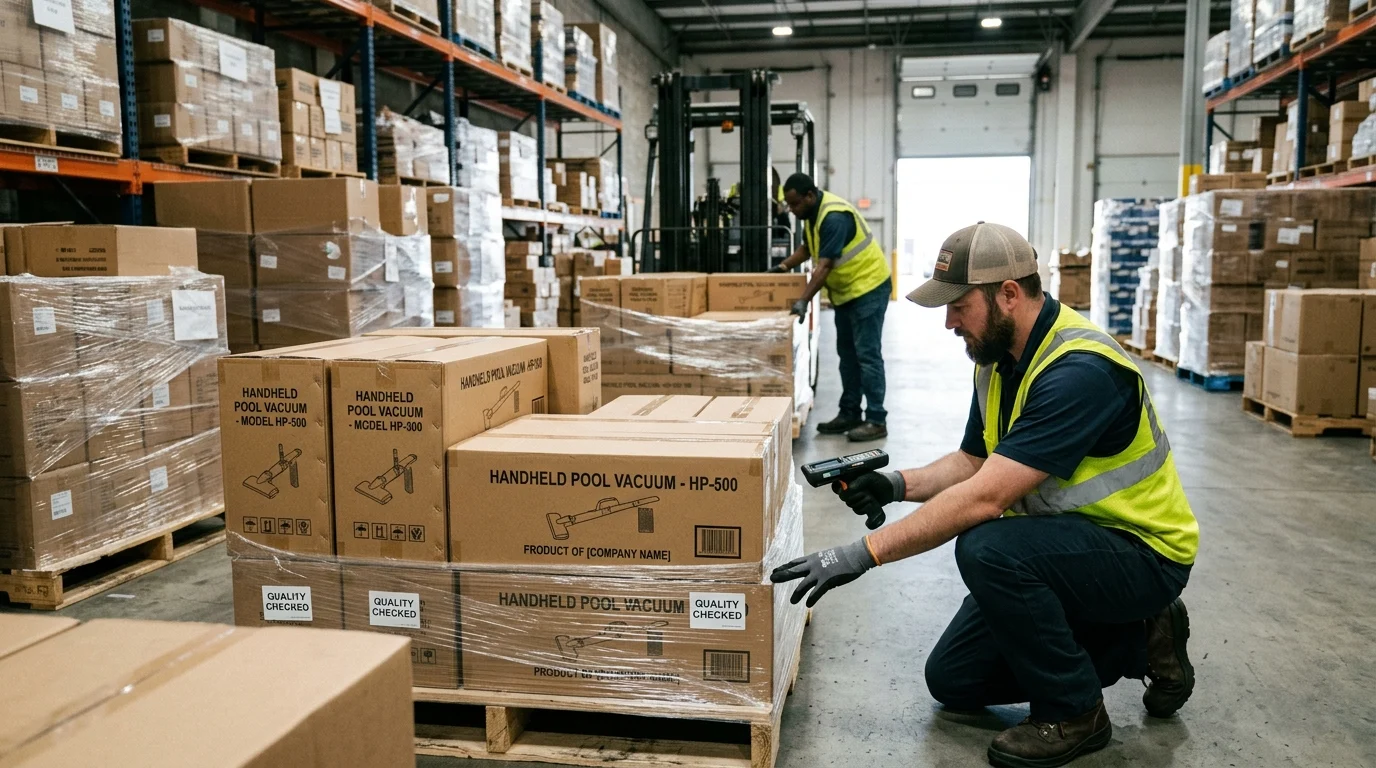
Selecting the appropriate manufacturing partner requires a rigorous technical evaluation of the product's underlying engineering. For B2B buyers, sourcing decisions cannot be based solely on aesthetic appeal or base unit cost; the mechanical reliability of the device directly impacts return rates, warranty claims, and brand reputation. Because these devices operate underwater while housing electronic components, the integrity of the watertight seals, the durability of the motor, and the safety of the battery management system (BMS) are paramount.
A critical engineering factor is the implementation of IPX8-rated waterproofing protocols. Premium manufacturers utilize advanced potting compounds for internal circuit boards and double O-ring seals on all user-accessible compartments, ensuring zero water ingress even under hydrostatic pressure. Additionally, the hydrodynamic design of the vacuum head and the internal flow dynamics dictate the unit's ability to maintain suction as the debris chamber fills. Buyers must scrutinize the manufacturer's fluid dynamics data to verify performance claims.
The choice of materials also dictates the product's lifespan in harsh, chemically treated water. Plastics must be UV-stabilized and resistant to high concentrations of chlorine, bromine, and varying pH levels. Polycarbonate blends and high-grade ABS plastics are typically required to prevent embrittlement over time. By establishing stringent engineering prerequisites during the sourcing phase, importers can mitigate downstream liabilities and ensure consistent product performance across diverse global markets.
Core technical specifications to compare
When evaluating potential suppliers, buyers must establish a standardized matrix of technical specifications. The primary performance metric is the volumetric flow rate, typically measured in gallons per minute (GPM) or liters per minute (LPM). A higher flow rate generally correlates with superior debris retrieval, provided the internal filtration media does not create excessive backpressure.
Filtration capabilities must also be assessed. Professional-grade units often feature multi-stage filtration, utilizing a coarse pre-filter for leaves and macro-debris, followed by a fine micro-filter capable of trapping particulate matter down to 50 microns. The volumetric capacity of the debris chamber (measured in liters) determines the operational duration before the user must empty the unit, a critical convenience factor for end-users.
Cordless model evaluation criteria
The transition to cordless architecture relies entirely on the efficacy of the onboard energy storage. Lithium-ion (Li-ion) cell configuration is the industry standard, but the specific chemistry, capacity (measured in milliampere-hours, mAh), and voltage dictate actual field performance. B2B buyers must verify the cycle life of the battery packs, ensuring they retain at least 80% of their nominal capacity after 300 to 500 charge cycles.
Equally important is the Battery Management System (BMS). A robust BMS prevents overcharging, deep discharging, thermal runaway, and short circuits. Evaluation criteria should also include the charging interface—magnetic induction charging or sealed proprietary pins are vastly superior to traditional plug-in ports, which are highly susceptible to corrosion in aquatic environments.
Product comparison framework
To systematically evaluate prospective inventory, procurement teams should utilize a tiered comparison framework. The following table illustrates a standard benchmarking matrix used by international buyers to categorize Handheld Pool Vacuums based on intended market segmentation:
| Specification Category | Entry-Level (Residential) | Mid-Tier (Prosumer) | Commercial-Grade (Pro Service) |
|---|---|---|---|
| Motor Power / Suction | 150W – 200W | 250W – 350W | 400W+ (Brushless DC) |
| Battery Capacity | 2000mAh (7.4V) | 4000mAh (11.1V) | 6000mAh+ (14.8V) |
| Run Time (Continuous) | 30 – 45 Minutes | 60 – 75 Minutes | 90 – 120 Minutes |
| Filtration Rating | Single-stage (250 micron) | Dual-stage (100 micron) | Multi-stage (50 micron) |
| Debris Capacity | 0.5 – 0.8 Liters | 1.0 – 1.5 Liters | 2.0+ Liters |
| Target B2B Margin | 25% – 35% | 35% – 45% | 40% – 55% |
Quality Control and Compliance Support for B2B Partners
In the global trade of electronic aquatic equipment, rigorous quality control (QC) and regulatory compliance are not optional; they are fundamental prerequisites for market entry. A manufacturer's ability to maintain a stringent Quality Management System (QMS), typically certified under ISO 9001 standards, determines the consistency of mass production. For B2B partners importing large volumes, a variance in manufacturing tolerances can lead to catastrophic defect rates, triggering costly product recalls and damaging established retail relationships.
Comprehensive QC begins long before the assembly line. Incoming Quality Control (IQC) ensures that raw materials, such as raw ABS resins, lithium cells, and copper windings, meet exact specifications before entering the production floor. During assembly, In-Process Quality Control (IPQC) stations monitor critical junctures, such as the ultrasonic welding of chassis components and the soldering of the BMS. Finally, Outgoing Quality Control (OQC) utilizes standard Acceptable Quality Limit (AQL) frameworks—often AQL 1.5 for major defects and 4.0 for minor defects—to clear shipments for export.
Beyond physical quality, navigating the labyrinth of international regulatory compliance requires a manufacturer with deep institutional knowledge. Electrical devices operating in water are heavily scrutinized by customs authorities and national safety boards. A competent manufacturing partner provides verifiable test reports and certificates of conformity, significantly expediting the customs clearance process and ensuring that the B2B buyer is legally protected in their target distribution region.
Quality assurance processes and defect prevention
Defect prevention in underwater vacuums relies heavily on automated testing apparatuses. Leading factories employ pressurized water chambers to simulate depths of up to 3 meters, ensuring IPX8 compliance on 100% of the assembled motor blocks. Motor lifecycle testing is conducted on a statistical sample, running units continuously for over 500 hours to identify potential points of thermal failure or brush degradation in non-brushless models.
Drop testing, simulating the impact of a unit falling onto a concrete pool deck, ensures structural integrity. By identifying failure modes during the prototyping and early production phases, manufacturers can implement corrective and preventive actions (CAPA), systematically engineering out vulnerabilities before mass production commences.
Compliance testing labeling and documentation
Entering specific geographical markets requires adherence to distinct regulatory frameworks. For the European Union, CE marking, RoHS (Restriction of Hazardous Substances), and REACH compliance are mandatory. The WEEE directive also dictates specific labeling for electronic waste disposal. In North America, UL or ETL certifications for the charging peripherals, alongside FCC compliance for any wireless diagnostic features, are critical.
A premier manufacturing partner will maintain an updated repository of these technical files. Furthermore, they will support B2B buyers by applying localized compliance labels, warning placards, and tracking serial numbers directly on the factory floor, ensuring that the product is completely retail-ready upon arrival at the destination port.
OEM ODM and private label support models
Manufacturers typically offer three distinct collaboration models to accommodate varying B2B strategies. The Original Equipment Manufacturer (OEM) model allows buyers to take an existing, proven product architecture and apply their own branding, packaging, and minor cosmetic alterations. This offers the fastest time-to-market, usually requiring 30 to 45 days for mass production.
The Original Design Manufacturer (ODM) model involves co-developing a completely new product. The B2B partner provides the industrial design and functional requirements, while the factory executes the mechanical engineering, tooling, and internal layout. This requires a higher upfront investment in injection molds and extended lead times (typically 4 to 6 months) but results in a proprietary product. The Private Label model sits between the two, offering white-label access to premium SKUs with moderate customization options, ideal for regional distributors looking to establish an in-house brand without R&D overhead.
Sourcing Logistics and Channel Execution Best Practices
Efficient supply chain execution is the mechanism by which B2B partnerships realize actual profitability. The physical movement of Handheld Pool Vacuums from a manufacturing facility in Asia to distribution hubs in North America, Europe, or Australia involves complex logistical orchestration. Because these products contain high-capacity lithium-ion batteries, they are classified under specific dangerous goods regulations (e.g., UN3481 for batteries contained in equipment), which dictates strict packaging, handling, and documentation protocols for both air and ocean freight.
Optimizing the logistics channel requires a proactive approach to spatial efficiency. Freight costs are calculated based on either actual weight or volumetric weight, whichever is higher. Given that pool vacuums are relatively lightweight but occupy significant physical space, volumetric weight is almost always the determining cost factor. B2B buyers must work closely with the manufacturer's packaging engineers to design retail boxes and master cartons that minimize dead space without compromising structural protection.
Furthermore, aligning production schedules with global shipping seasons is crucial. The pool and spa industry is highly seasonal in the Northern Hemisphere, with peak retail demand occurring between April and July. To ensure inventory is positioned correctly, backward scheduling must account for 30-45 days of ocean transit, 10-15 days for customs clearance and drayage, and 30-45 days for factory production. Consequently, purchase orders for the spring season must typically be finalized by late Q4 of the preceding year.
Practical sourcing workflow for buyers
A disciplined sourcing workflow mitigates risk. The process should commence with a detailed Request for Quotation (RFQ) specifying target volumes, compliance requirements, and required incoterms (e.g., FOB Shenzhen). Following commercial alignment, the buyer should request a T1 (first tool) or off-the-shelf sample for rigorous field testing.
Upon sample validation, a trial order—often consisting of 500 to 1,000 units—should be placed to test the manufacturer's mass-production consistency and the logistics pipeline. Only after the trial order has been successfully received, inspected, and distributed should the buyer transition to high-volume, automated replenishment cycles, integrating the supplier into their ERP systems for seamless inventory management.
Packaging carton planning and shipping considerations
Packaging design serves the dual purpose of retail marketing and logistical protection. Master cartons must be engineered to withstand the rigors of international transit, ideally meeting ISTA (International Safe Transit Association) 1A or 3A drop-test standards.
To maximize container yield, packaging dimensions must be mathematically optimized for standard pallet sizes (e.g., 40"x48" in the US, 1200x800mm in the EU) and standard ISO shipping containers.
| Container Type | Internal Volume (CBM) | Est. Unit Capacity (Standard Retail Box) | Logistics Optimization Strategy |
|---|---|---|---|
| 20ft Standard | ~33 CBM | 1,200 – 1,500 Units | Floor-loaded to maximize space; ideal for initial trial orders. |
| 40ft Standard | ~67 CBM | 2,500 – 3,200 Units | Palletized for rapid warehouse unloading; balances cost and speed. |
| 40ft High Cube | ~76 CBM | 3,000 – 3,800 Units | Best economy of scale; utilizes vertical space for lightweight vacuums. |
Chart: Global B2B Sourcing Trajectory
- Phase 1 (Month 1-2): RFQ, Compliance Audit, Sample Testing
- Phase 2 (Month 3-4): Trial Order Production, Packaging Optimization
- Phase 3 (Month 5-6): Ocean Freight Transit, Customs Clearance
- Phase 4 (Month 7+): Retail Placement, Reorder Forecasting
Why Choose a Manufacturer Led Partnership Model
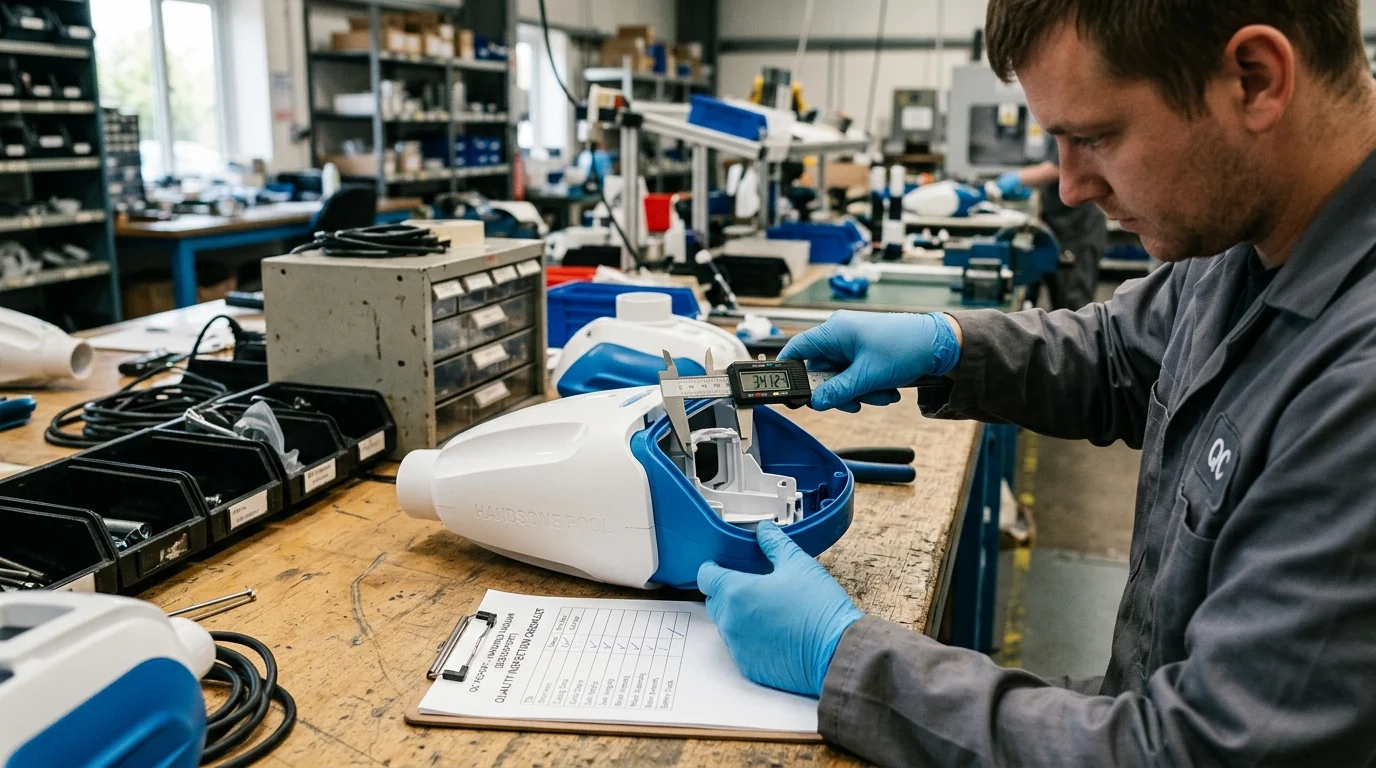
In the ecosystem of international trade, B2B buyers frequently face the choice of sourcing through intermediary trading companies or establishing direct relationships with the manufacturersthemselves. While intermediaries can offer broad catalog aggregation, a manufacturer-led partnership model provides distinct, structural advantages for technical products like Handheld Pool Vacuums. Direct engagement removes margin stacking, allowing the buyer to access true factory-gate pricing, which significantly enhances downstream competitiveness and profit margins.
More importantly, a direct partnership integrates the buyer into the manufacturer's Research and Development (R&D) loop. As battery technology evolves and consumer expectations shift toward smart, connected devices, having a direct line to the engineering team allows B2B partners to request specific feature modifications or exclusive upgrades. This agility is impossible to achieve through a trading company, which typically lacks the technical authority to alter production line specifications or commit to custom tooling investments.
Finally, a manufacturer-led model provides a single point of accountability. In the event of a warranty spike or a component failure in the field, the root cause analysis can be conducted immediately by the engineers who designed the unit. Corrective actions can be implemented in the very next production batch, minimizing financial exposure and safeguarding the distributor's reputation in their respective domestic market.
How to assess supplier capability and total cost
Assessing a manufacturer requires looking beyond the initial unit quote to calculate the Total Cost of Ownership (TCO). TCO encompasses the base price, freight costs, import duties, anticipated defect rates, and the cost of warranty fulfillment. A supplier offering a unit price 10% lower but suffering from a 5% higher defect rate will ultimately cost the B2B buyer significantly more in reverse logistics and customer dissatisfaction.
Capability assessment should include a physical or virtual factory audit. Buyers must evaluate the facility's production capacity (units per month), the sophistication of their automated assembly equipment, and the ratio of QC personnel to assembly line workers. Financial stability and historical export data to the buyer's target region also serve as strong indicators of a supplier's reliability and institutional competence.
Decision factors for long term partnership success
Sustainable B2B growth relies on aligning long-term strategic goals. Successful partnerships are characterized by transparent R&D roadmaps, where the manufacturer shares their 12-to-24-month product pipeline with the distributor, allowing for synchronized marketing and launch strategies.
Intellectual Property (IP) protection is another critical decision factor. Clear agreements regarding the ownership of custom tooling, ODM designs, and regional exclusivity ensure that the B2B partner's investment in market development is not undercut by the manufacturer selling identical units to direct competitors. Ultimately, selecting a manufacturer that views the relationship as a collaborative joint venture, rather than a purely transactional exchange, is the defining factor in achieving market leadership in the aquatic equipment sector.
Key Takeaways
- The most important conclusions and rationale for Handheld Pool Vacuums
- Specs, compliance, and risk checks worth validating before you commit
- Practical next steps and caveats readers can apply immediately
Frequently Asked Questions
Why are handheld pool vacuums attractive for distributors and importers?
They are easy for end users to adopt, fit compact pools and spas, and often sell faster than complex cleaners because no installation or filtration-system connection is needed.
What B2B support can partners expect from Handsome Pool?
Handsome Pool can support OEM/private label projects, technical specifications, accessory bundling, and stable manufacturing for distributors, importers, and brand owners.
Which end markets are best suited for handheld pool vacuums?
Above-ground pools, spas, hot tubs, inflatable pools, and small urban pools are strong targets because these spaces often need portable, independent cleaning tools.
What technical features should buyers verify before sourcing?
Check IPX8 waterproofing, lithium-battery safety, motor durability, seal quality, filter performance, and replacement-part availability to reduce returns and warranty issues.
Can handheld pool vacuums create recurring revenue for B2B partners?
Yes. Consumables and spare parts like filter bags, brush heads, and accessory kits can drive repeat orders and improve lifetime account value.