


Introduction
For buyers of Handheld Pool Vacuums, certification is not a box-ticking exercise; it is a practical signal of product safety, import readiness, and supplier discipline. In a category that combines lithium batteries, electric motors, and constant exposure to water, marks such as CE, RoHS, and ETL help reduce compliance risk, support market access, and protect downstream channels from costly failures or recalls. This article explains what these certifications actually indicate, why they matter when evaluating cordless pool products, and how they can guide sourcing decisions toward safer inventory, smoother distribution, and stronger customer confidence.
Why Certified Handheld Pool Vacuums Matter
Procurement professionals operating in the aquatic maintenance sector face a complex regulatory landscape where product safety directly impacts corporate liability and market access. The commercial distribution of submersible electronics requires rigorous adherence to international safety directives, transforming compliance from a basic administrative checklist into a foundational pillar of supply chain risk management. When sourcing high-capacity cleaning equipment, the presence of verified safety marks is the primary indicator of manufacturing maturity and engineering integrity.
The market for Handheld Pool Vacuums has expanded rapidly as consumers transition away from cumbersome tethered systems toward lithium-ion battery-powered convenience. However, the intersection of high-density energy storage and aquatic environments creates unique hazard profiles. Without stringent oversight, distributors expose themselves to catastrophic product failures, regulatory embargoes, and severe brand degradation. Understanding the operational necessity of these certifications is paramount for buyers tasked with building resilient, profitable hardware portfolios.
How certifications reduce channel risk
Channel risk encompasses everything from catastrophic hardware failures at the consumer level to inventory seizures at customs checkpoints. Uncertified electronic devices designed for water submersion present severe electrocution and thermal runaway risks. Industry failure analyses indicate that uncertified lithium-ion battery packs utilized in aquatic environments exhibit thermal event rates approaching 2.5%. Conversely, models engineered to meet strict UL/ETL and CE protocols demonstrate failure rates below 0.1%, drastically mitigating the threat of consumer injury and subsequent litigation.
Furthermore, uncertified inventory frequently triggers automated compliance holds at major international ports. Customs and Border Protection (CBP) in the United States, alongside EU market surveillance authorities, utilize automated targeting systems to intercept non-compliant electronics. A shipment delayed by a 30-day compliance investigation not only incurs substantial demurrage fees—often exceeding $150 per container per day—but also disrupts seasonal retail distribution windows, resulting in irreversible revenue loss for the fiscal quarter.
Why distributors and retailers require compliance
Tier-one distributors and big-box retailers enforce strict compliance mandates as a prerequisite for vendor onboarding. These corporate entities operate under comprehensive risk mitigation frameworks that strictly prohibit the introduction of unverified electrical goods into their merchandising channels. Before a purchase order is generated, suppliers must submit valid testing reports validating that the equipment meets or exceeds regional safety thresholds.
Insurance underwriting serves as another critical driver for mandatory compliance. Commercial general liability policies for hardware distributors typically require minimum coverage limits ranging from $2,000,000 to $5,000,000. Actuaries and underwriters will categorically deny coverage—or charge exorbitant, margin-eroding premiums—if a distributor's product catalog lacks ETL, CE, or equivalent third-party validations. Retailers demand indemnification, and without certified products backing the supply chain, distributors cannot secure the necessary insurance instruments to finalize wholesale agreements.
What CE, RoHS, and ETL Mean
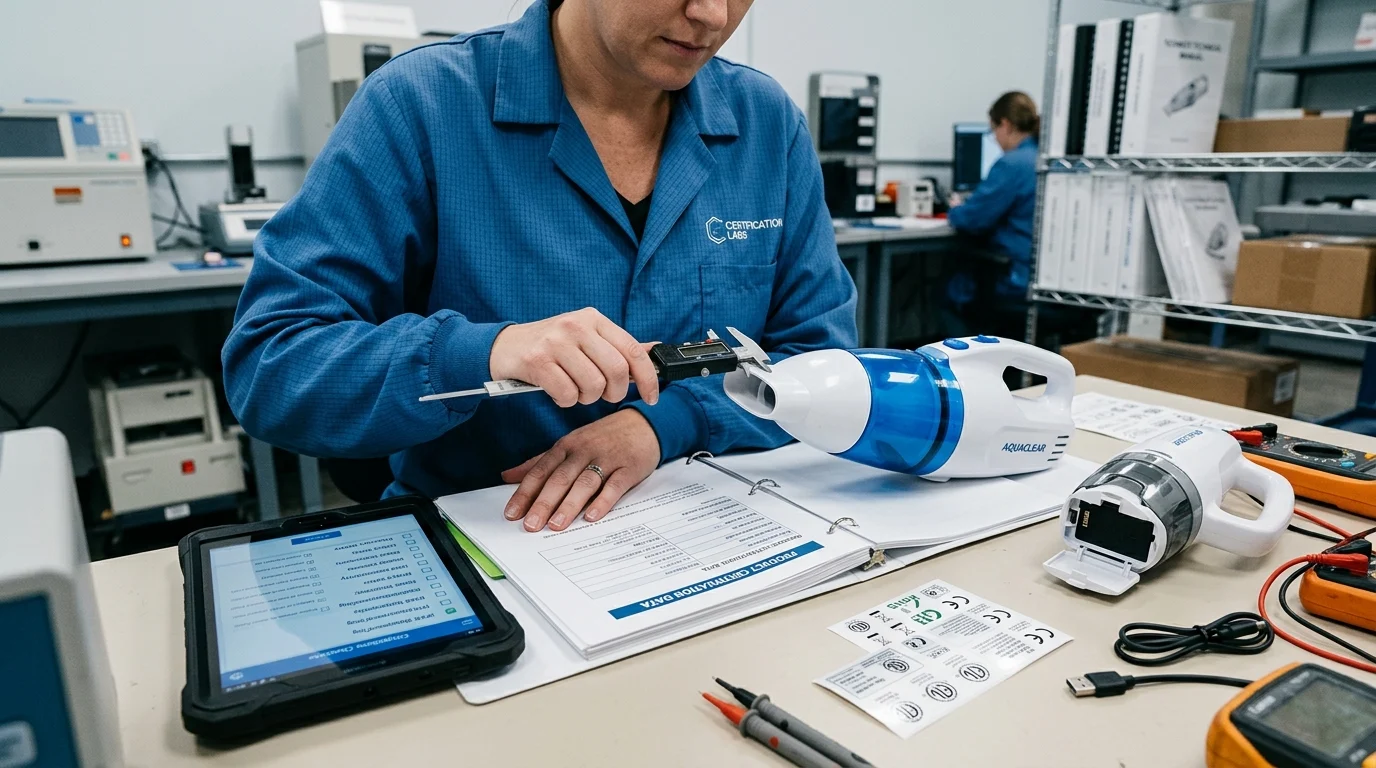
Navigating international trade requires a precise understanding of regional regulatory frameworks and the specific engineering baselines they enforce. Acronyms such as CE, RoHS, and ETL represent distinct testing methodologies and legal requirements rather than generic seals of approval. For procurement teams, decoding these standards is essential for matching product specifications with target market legalities.
While these certifications frequently overlap in their ultimate goal of consumer protection, they address different aspects of the manufacturing process. From electromagnetic compatibility to the chemical composition of internal solders, each directive mandates specific testing protocols that dictate how a product is designed, sourced, and assembled.
Which safety and material requirements they cover
The CE (Conformité Européenne) mark is a mandatory legal conformity requirement for products sold within the European Economic Area (EEA). For submersible battery-operated devices, CE compliance typically involves the Low Voltage Directive (LVD) and the Electromagnetic Compatibility (EMC) Directive. These ensure the device operates safely at its specified voltage and neither emits nor is susceptible to electromagnetic interference. Additionally, the RoHS (Restriction of Hazardous Substances) directive is intertwined with CE compliance, strictly limiting the use of specific toxic materials in electronic manufacturing.
RoHS compliance is heavily quantified. It mandates a maximum concentration value of 0.1% by weight (1000 ppm) in homogeneous materials for lead, mercury, hexavalent chromium, polybrominated biphenyls (PBB), and polybrominated diphenyl ethers (PBDE), and 0.01% (100 ppm) for cadmium. Concurrently, the ETL (Electrical Testing Laboratories) mark, prevalent in the North American market, indicates compliance with specific UL (Underwriters Laboratories) safety standards. For aquatic vacuums, this often involves rigorous testing for water ingress protection, motor insulation, and short-circuit prevention under continuous submersion.
How to compare self-declaration and third-party testing
A critical distinction in regulatory compliance lies in the difference between self-declaration and third-party testing. Under certain CE directives (such as Module A), manufacturers are legally permitted to self-certify that their products meet essential requirements, compiling their own Technical Construction File (TCF). While legally permissible for low-risk items, self-declaration introduces a layer of supplier-side bias and requires buyers to perform highly aggressive due diligence to ensure the underlying engineering data is accurate and not merely fabricated to expedite shipping.
In contrast, third-party testing involves an independent, accredited laboratory—such as Intertek (which issues the ETL mark), TÜV SÜD, or SGS—conducting physical tear-downs and stress tests. ETL certification is strictly a third-party process, requiring not only initial product validation but also ongoing quarterly factory inspections to maintain the mark. This continuous oversight guarantees that mass-produced units mirror the quality of the initial testing sample.
| Certification | Governing Market | Primary Focus | Testing Methodology | Key Threshold Example |
|---|---|---|---|---|
| CE | European Economic Area | Safety, Health, Environmental | Self-Declaration or Notified Body | Adherence to LVD/EMC directives |
| RoHS | Global (Originated EU) | Material Toxicity | Chemical Analysis (XRF screening) | Lead (Pb) < 0.1% by weight |
| ETL | North America | Electrical Safety | Strict Third-Party Laboratory | UL 1081 (Swimming Pool Pumps) compliance |
Key Product Specs and Quality Controls
While safety certifications establish the legal baseline for market entry, performance specifications dictate commercial success and end-user satisfaction. A fully compliant device that fails to remove heavy debris efficiently will ultimately generate high return rates, negating the value of its safety credentials. Therefore, buyers must evaluate technical specifications in tandem with quality control documentation.
The engineering architecture of a submersible vacuum involves a delicate balance between motor power, battery density, and waterproof sealing. Optimizing these variables requires sophisticated manufacturing controls and a deep understanding of fluid dynamics as they apply to localized pool environments.
How to assess suction, runtime, and charging design
Suction power, measured in liters per minute (L/min) or gallons per minute (GPM), is the primary metric of operational efficacy. Entry-level models typically generate between 30 and 40 L/min, sufficient for light surface debris, whereas commercial-grade units must exceed 70 L/min to effectively capture dense particulates like sand and wet leaves. This suction is directly tied to the battery's discharge rate and capacity. A standard 2000mAh lithium-ion pack may offer 45 minutes of runtime, but the voltage drop as the battery depletes can severely throttle suction power in the final 15 minutes of operation.
Charging design is equally critical to both performance and safety. Premium manufacturers utilize intelligent Battery Management Systems (BMS) that regulate voltage input and monitor thermal profiles during the charging cycle. Optimal charging times should be engineered to fall between 4 and 6 hours; rapid charging without adequate thermal dissipation degrades the chemical integrity of the lithium cells, reducing the battery's overall lifecycle from an expected 500 charge cycles down to fewer than 200.
Which criteria separate premium from standard models
The demarcation between standard and premium aquatic vacuums is heavily defined by ingress protection and motor technology. Standard models often utilize brushed DC motors, which are cost-effective but prone to mechanical wear and carbon dust generation. Premium models, such as a high-end Spa Vacuum Cleaner for Medium Pools, leverage brushless DC (BLDC) motors. BLDC technology offers a 30% increase in energy efficiency and significantly extends the operational lifespan of the unit by eliminating physical brush friction.
Furthermore, waterproofing standards distinctly separate the tiers. While an IPX4 rating (splash resistance) is entirely inadequate for this product category, standard models may only achieve IPX7, allowing submersion up to 1 meter for 30 minutes. Premium models demand an IPX8 rating, guaranteeing continuous operation under water at specified depths—often tested at 3 meters for 2 hours—ensuring the hermetic seals and O-rings can withstand sustained hydrostatic pressure.
| Specification Category | Standard Model Tolerances | Premium Model Tolerances |
|---|---|---|
| Motor Technology | Brushed DC Motor | Brushless DC (BLDC) Motor |
| Suction Capacity | 30 - 40 L/min | 70 - 100+ L/min |
| Battery Capacity | 2000mAh (Standard BMS) | 4000mAh+ (Advanced Thermal BMS) |
| Ingress Protection | IPX7 (1m for 30 mins) | IPX8 (3m continuous submersion) |
| Filtration Micron | 250 microns (Standard Mesh) | 50 microns (Pleated Fine Filter) |
How Buyers Can Verify Certification
Procurement teams cannot rely solely on supplier assertions or low-resolution images of certificates to validate compliance. The global supply chain is fraught with expired, altered, or entirely counterfeit documentation. Establishing a rigorous verification framework is an essential fiduciary responsibility for any buyer importing electrical goods.
Verification extends beyond the digital exchange of PDF documents; it requires a holistic review of the supplier's manufacturing ecosystem. This includes physical audits, cross-referencing public certification databases, and ensuring that every piece of localized packaging aligns with the strict labeling mandates of the destination market.
Which supplier audit and document checks to perform
The first step in verification is demanding the complete Declaration of Conformity (DoC) alongside the comprehensive Technical Construction File (TCF). The DoC must explicitly list the specific directives (e.g., 2014/35/EU for LVD) and the harmonized standards applied during testing. For third-party marks like ETL, buyers must request the Authorization to Mark (ATM) document and verify the manufacturer's control number directly through the Intertek online directory. A valid certificate will always map back to a verifiable, active listing in the testing laboratory's public database.
Supplier audits should also evaluate the factory's Quality Management System (QMS), typically benchmarked against ISO 9001 standards. Professional buyers require an audit footprint that demonstrates annual or bi-annual third-party inspections. If a CE or RoHS testing report is dated more than 24 to 36 months prior, it is highly likely that internal component sourcing has changed since the original test, rendering the historical compliance data obsolete and exposing the buyer to unverified component risks.
How packaging, labeling, manuals, and spare parts support compliance
Compliance is heavily scrutinized at the packaging and manual level by customs officials. The CE mark, for instance, must be affixed visibly, legibly, and indelibly to the product or its data plate, and must be a minimum of 5mm in height. If the product is too small, the mark must appear on the packaging and accompanying documents. Additionally, the WEEE directive mandates the inclusion of the crossed-out wheeled bin symbol, instructing consumers on proper electronic waste disposal.
For buyers engaging in OEM or ODM agreements, translating these compliance requirements into customized retail packaging necessitates strategic volume planning. Suppliers typically enforce a Minimum Order Quantity (MOQ) ranging from 1,000 to 2,000 units to absorb the setup costs for localized, multi-language compliant packaging and manuals. Furthermore, verifying that spare parts—specifically replacement chargers and battery modules—carry their own independent UL or CE marks is critical, as these components represent the highest failure and fire risk vectors in the product lifecycle.
A Buying Framework for Certified Models
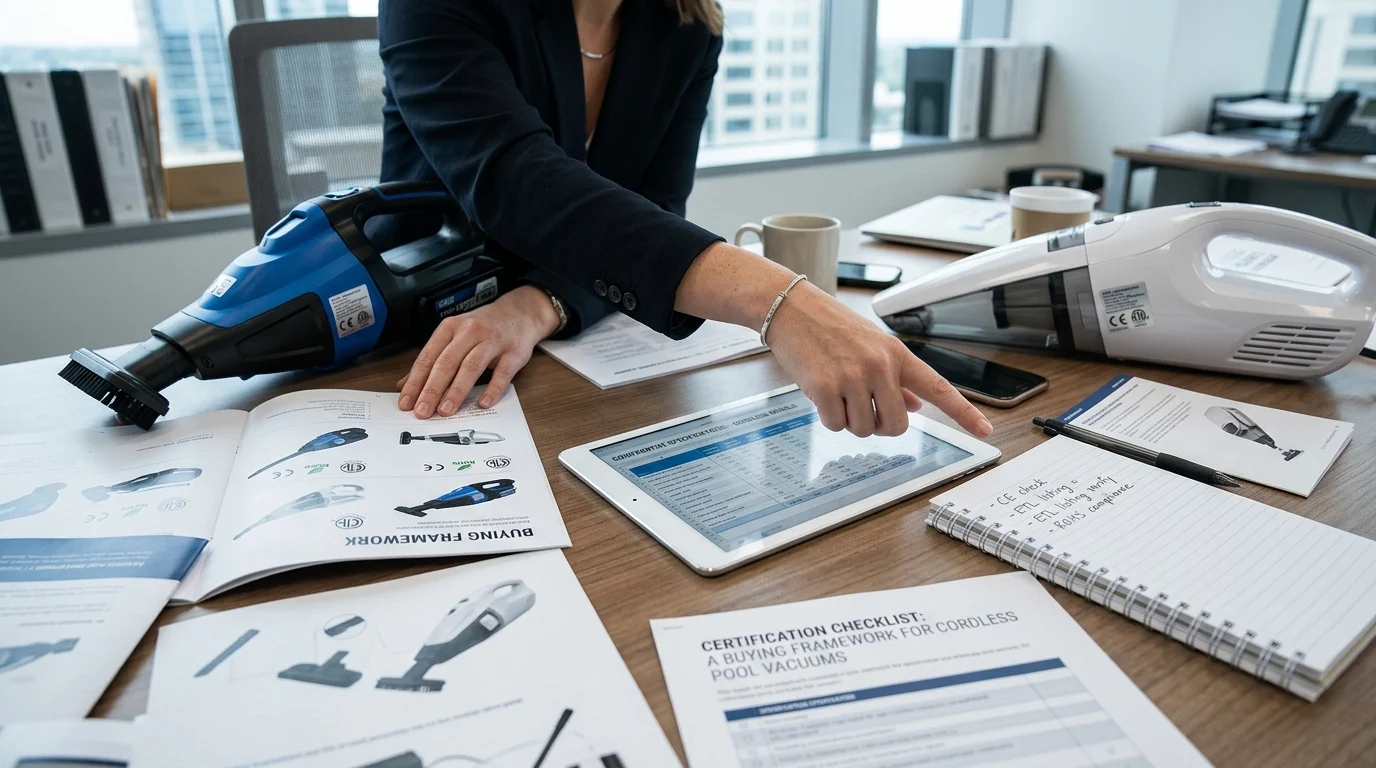
Developing a robust purchasing framework requires moving beyond transactional unit pricing to evaluate the Total Cost of Ownership (TCO). Buyers must synthesize regulatory compliance, engineering performance, and upfront capital expenditure into a cohesive sourcing strategy that protects margins while satisfying end-user demands.
The initial sticker shock of fully certified, premium-grade aquatic hardware often deters entry-level importers. However, seasoned supply chain directors understand that the upfront premium paid for documented quality assurance functions as a high-yield insurance policy against backend logistical and reputational catastrophes.
How to balance compliance, performance, and cost
Integrating certified components—such as UL-listed battery cells, certified flame-retardant ABS plastics, and IPX8-rated hermetic seals—adds approximately 15% to 22% to the baseline manufacturing cost of a handheld vacuum. When balancing this against performance and cost, buyers must calculate the acceptable price elasticity of their target retail demographic. A distributor supplying commercial pool cleaning services can easily absorb a 20% cost increase, as commercial end-users demand the 70+ L/min suction and 4000mAh runtime that only premium, certified models reliably provide.
Conversely, buyers targeting the residential, above-ground pool market must balance cost constraints more aggressively. In these scenarios, sourcing models with optimized 30-40 L/min standard motors but uncompromising ETL and RoHS certifications ensures safety is never sacrificed for margin. The framework dictates that while performance specifications (suction, battery size) can be scaled down to meet price targets, safety certifications remain non-negotiable binary requirements.
Why documented quality assurance improves long-term value
Documented Quality Assurance (QA) directly correlates to measurable long-term financial value by drastically reducing Return Merchandise Authorization (RMA) rates. In the consumer electronics sector, the industry average RMA rate hovers around 4.5%. However, procurement frameworks that mandate strict third-party QA and verified certifications routinely see RMA rates compress to under 1.2%. This reduction eliminates the hidden costs of reverse logistics, warehousing defective units, and processing consumer refunds.
Furthermore, certified models inherently possess extended operational lifecycles. A battery pack regulated by a certified BMS will reliably surpass 300 charge cycles while maintaining 80% of its original capacity. This longevity allows distributors to confidently offer 12-to-24-month warranties, a critical marketing leverage point that drives B2B wholesale adoption. Ultimately, a buying framework anchored in verifiable certification transforms compliance from a regulatory burden into a distinct competitive advantage, ensuring sustainable profitability and brand authority in the aquatic maintenance market.
Key Takeaways
- The most important conclusions and rationale for Handheld Pool Vacuums
- Specs, compliance, and risk checks worth validating before you commit
- Practical next steps and caveats readers can apply immediately
Frequently Asked Questions
Why do CE, RoHS, and ETL certifications matter for handheld pool vacuums?
They verify electrical safety, material compliance, and market readiness, helping reduce liability, customs delays, and retailer rejection.
Is CE enough to sell a cordless pool vacuum in the US?
No. CE supports EU market access, while US buyers often require ETL or equivalent third-party electrical safety certification.
What does RoHS cover in a handheld pool vacuum?
RoHS limits hazardous substances in electronic parts, such as lead and certain flame retardants, supporting safer materials and smoother EU compliance.
Can Handsomepool provide certified handheld pool vacuums for distributors?
Yes. Handsomepool focuses on cordless pool products and can support buyers seeking models aligned with CE, RoHS, and ETL requirements.
How can buyers verify a vacuum’s certification before ordering?
Request the certificate, test report, and product model match, then confirm the issuing lab and labeling before shipment approval.