


Introduction
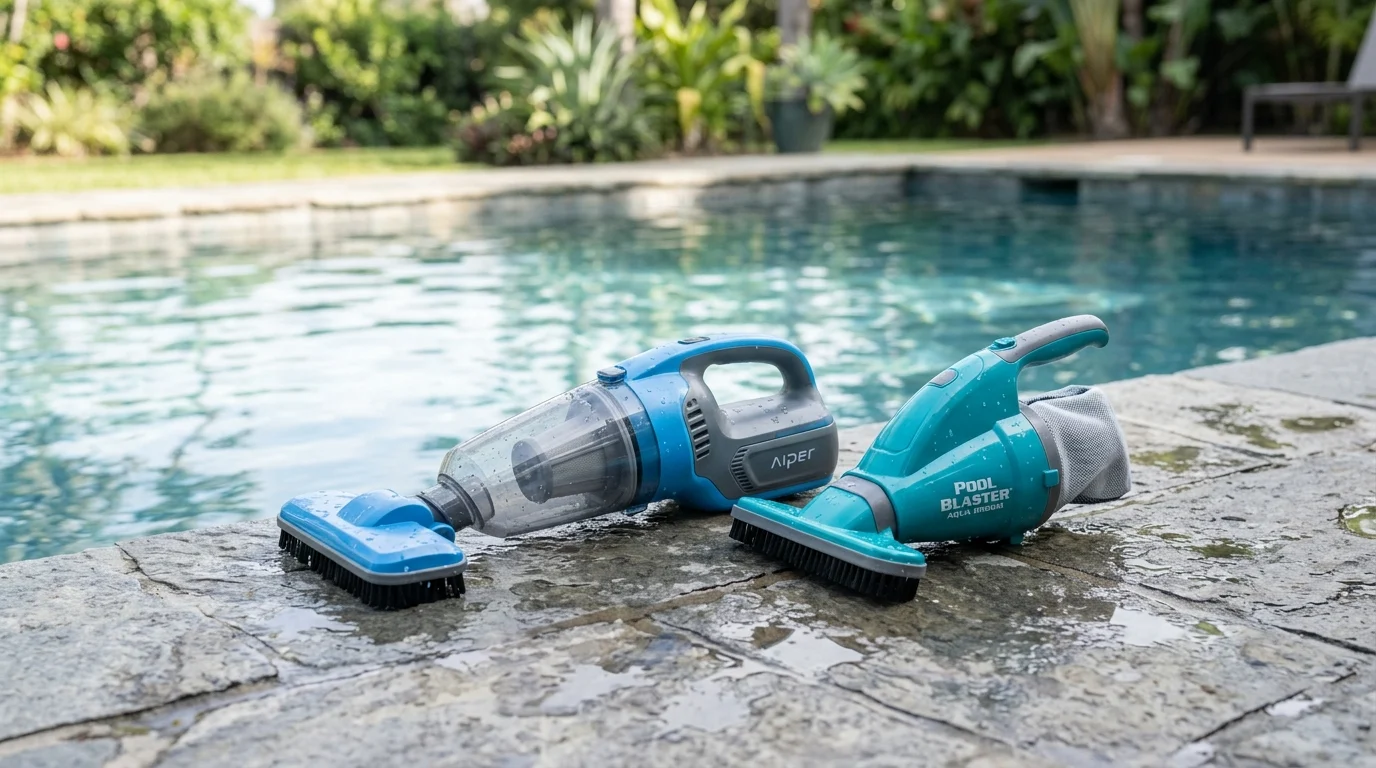
For hotels and resorts, pool upkeep is not just a cleaning task but a daily operational priority tied to guest perception, safety, and staffing efficiency. Handheld Pool Vacuums have emerged as a practical alternative to bulky traditional systems, allowing teams to remove debris quickly with less setup, less downtime, and greater flexibility during busy hours. When sourced wholesale, these tools can also support broader procurement goals by lowering unit costs and standardizing maintenance equipment across multiple properties. The discussion ahead explains why that combination of speed, convenience, and purchasing efficiency is making Handheld Pool Vacuums an increasingly strategic choice for hospitality operators.
Why Wholesale Handheld Pool Vacuums Are a Strategic Advantage
Maintaining pristine aquatic facilities is a critical operational mandate for the hospitality sector, where water quality directly impacts brand reputation and guest satisfaction. Historically, the maintenance of a Hotel Pool required cumbersome filtration hoses, heavy commercial pumps, and significant setup time. These traditional methods often force facility managers to close pools for 45 to 60 minutes during peak daylight hours just to clear localized debris. The introduction of commercial-grade, battery-operated vacuum technology has fundamentally shifted this paradigm, allowing maintenance teams to address aesthetic and hygienic standards without disrupting the guest experience.
Procuring these devices at scale through wholesale channels introduces a compounding advantage for multi-property operators and large resorts. Rather than treating pool vacuums as ad-hoc retail purchases, procurement leaders are integrating them into centralized capital expenditure planning. By purchasing in volume, hospitality enterprises secure lower per-unit costs, standardize their equipment fleets, and guarantee immediate availability of maintenance tools across sprawling resort footprints.
How handheld pool vacuums reduce labor pressure
The hospitality industry consistently faces severe labor market constraints, making workforce efficiency a primary objective for facility directors. Traditional aquatic maintenance requires specialized training to prime hoses, manipulate multi-port valves, and avoid introducing air into the primary filtration system. In contrast, modern battery-operated units deploy in under two minutes. This operational simplicity allows cross-trained groundskeeping staff, rather than solely specialized certified pool operators (CPOs), to perform daily spot-cleaning.
By eliminating the setup and teardown phases of aquatic maintenance, properties achieve a measurable Pool Cleaning, Efficiency Boost. Field data indicates that utilizing autonomous or handheld suction devices reduces daily manual pool maintenance labor hours by 30% to 40%. Over a 365-day operational cycle, saving just 45 minutes per day per pool translates to over 270 repurposed labor hours annually, allowing staff to focus on preventative maintenance and guest-facing services.
Where wholesale handheld pool vacuums fit operational strategy
Integrating these devices into a broader operational strategy requires shifting from reactive purchasing to proactive fleet management. For a sprawling resort featuring a main aquatic center, multiple wading pools, architectural water features, and private villa spas, a single commercial vacuum is insufficient. Deploying dedicated units to distinct zones prevents cross-contamination and eliminates the downtime associated with transporting equipment across a 50-acre property.
Wholesale procurement aligns perfectly with this zonal strategy. Engaging directly with manufacturers or primary distributors typically involves Minimum Order Quantities (MOQs) ranging from 50 to 100 units. Committing to these volumes frequently yields a 25% to 40% reduction in unit cost compared to single-unit retail pricing. Furthermore, standardizing the fleet across a hospitality portfolio ensures that all properties utilize the same battery ecosystems, filter bags, and replacement parts, drastically simplifying inventory management for regional directors.
Which Specifications Matter Most for Hospitality Buyers
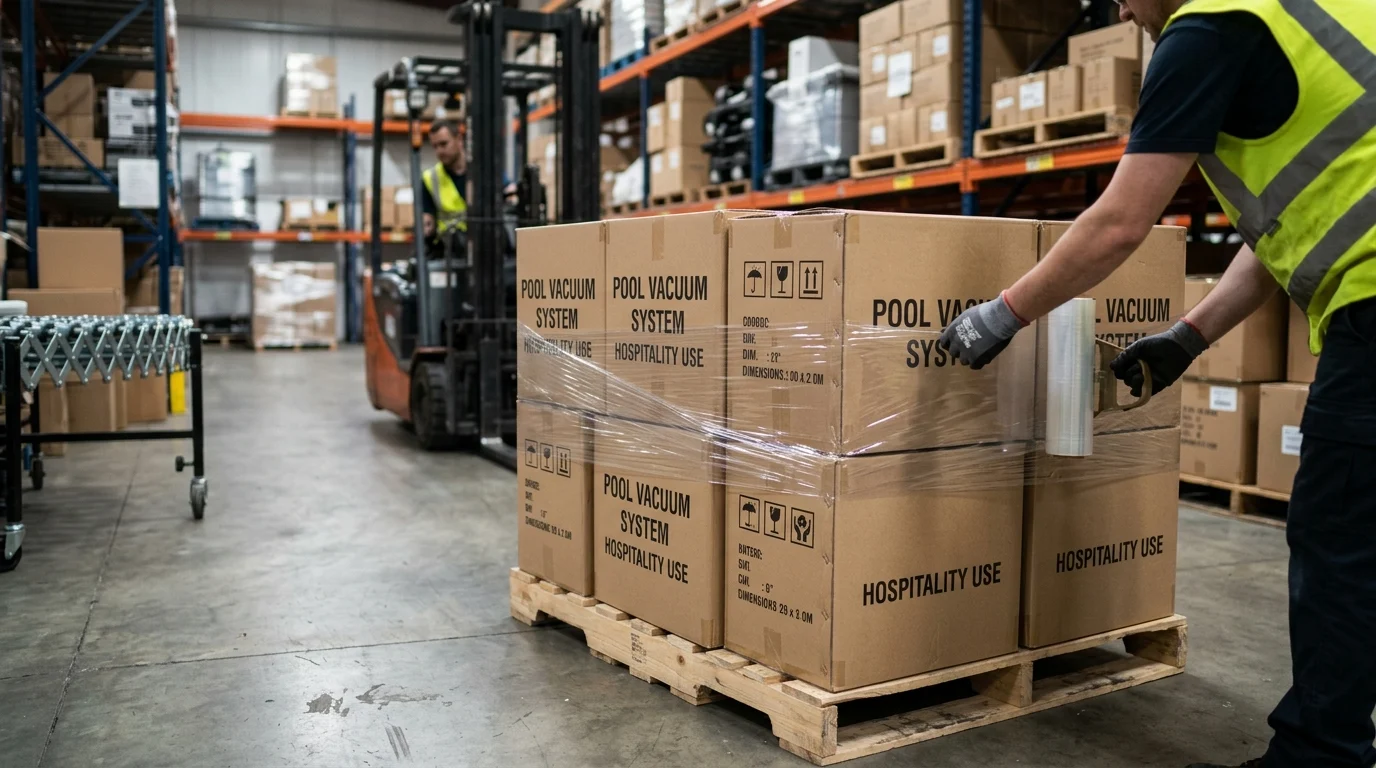
Transitioning from consumer-grade retail products to commercial hospitality equipment requires a rigorous evaluation of technical specifications. Procurement teams must look beyond marketing claims and analyze the engineering metrics that dictate performance under continuous, heavy-duty usage. A Handheld Vacuum deployed in a resort environment will process significantly more debris, endure harsher chemical exposure, and undergo more frequent charging cycles than a residential counterpart.
Understanding the interplay between motor efficiency, battery chemistry, and structural integrity is essential. Buyers must establish baseline minimum specifications to ensure the procured fleet can withstand the rigors of a 365-day commercial operating environment without experiencing premature mechanical failure.
How to compare suction performance and battery runtime
Suction performance and battery longevity are the two most critical metrics for operational viability. Suction is typically measured in Gallons Per Minute (GPM) or liters per minute, indicating the volume of water processed through the filter media. For hospitality applications—where debris ranges from dense sand to broad palm leaves—a minimum flow rate of 15 to 25 GPM is required to ensure single-pass cleaning efficiency.
Battery runtime must align with the daily maintenance schedule of the property. Commercial units utilize advanced lithium-ion battery packs, moving away from legacy lead-acid or nickel-cadmium options. A hospitality-grade unit must deliver a minimum continuous runtime of 60 to 90 minutes per charge. Devices failing to meet this 60-minute threshold frequently die mid-task, forcing maintenance staff to abandon the cleaning process or revert to manual hose systems, thereby negating the intended efficiency gains.
Which tradeoffs matter most in product comparison
Evaluating products requires acknowledging the inherent tradeoffs dictated by physics and engineering. The most prominent tradeoff exists between battery capacity and ergonomic weight. A larger lithium-ion array provides extended runtime and sustained voltage to the impeller, but it significantly increases the physical weight of the submerged unit, leading to operator fatigue during extended use.
| Specification | Consumer-Grade Unit | Commercial Hospitality Unit | Operational Impact |
|---|---|---|---|
| Flow Rate (GPM) | 5 - 10 GPM | 15 - 25+ GPM | Dictates speed of debris removal and single-pass efficiency. |
| Battery Runtime | 30 - 45 Minutes | 60 - 90+ Minutes | Determines ability to clean multiple water features per charge. |
| Debris Capacity | < 1 Liter | 2 - 5 Liters | Reduces frequency of stopping to empty the filter chamber. |
| Charge Time | 8 - 12 Hours | 3 - 5 Hours | Enables multiple deployments within a single operational shift. |
Procurement officers must also weigh the cost of high-capacity debris chambers against the maneuverability of the device. Units designed to hold 5 liters of leaves are bulkier and struggle to navigate tight corners in custom-shaped spas or architectural fountains. Buyers must profile their specific debris load—properties dealing primarily with fine sand require different configurations than those surrounded by heavy foliage.
How durability, serviceability, and attachments affect value
The lifecycle value of a commercial aquatic tool is heavily dependent on its durability and the accessibility of its internal components. Devices must feature a minimum ingress protection rating of IP68, certifying them for continuous submersion in chemically treated water. Furthermore, the external housing should be constructed from UV-resistant, impact-modified polymers (such as specialized ABS or polycarbonate blends) to survive inevitable drops on concrete pool decks.
Serviceability dictates the total cost of ownership. Hospitality buyers should reject units with sealed, non-serviceable chassis. If an impeller jams or a battery cell degrades, on-site maintenance teams must be able to swap the component using standard tools. Additionally, compatibility with standard commercial telescopic poles (typically 1.25-inch diameter) is mandatory. Proprietary attachment mechanisms force properties to purchase redundant poles and complicate daily storage.
How to Source Wholesale Handheld Pool Vacuums
Navigating the global supply chain to source wholesale Handheld Pool Vacuums demands a structured vendor qualification process. Unlike domestic retail purchasing, international wholesale sourcing exposes buyers to risks related to quality control, intellectual property, and logistical delays. Hospitality procurement teams must treat the sourcing process as a long-term partnership rather than a transactional exchange.
Establishing direct lines of communication with manufacturers or tier-one distributors allows buyers to negotiate favorable terms, request customized modifications, and secure reliable after-sales support. The objective is to build a resilient supply chain that guarantees product availability and consistent quality across multiple ordering cycles.
What criteria identify reliable suppliers
Identifying a reliable manufacturing partner requires auditing their production capabilities and quality assurance protocols. Buyers should request comprehensive factory profiles, focusing on automated testing lines and overall monthly production capacity. A supplier producing 10,000 units monthly demonstrates the scale necessary to fulfill large hospitality orders without disrupting their operations.
Quality control metrics are the most revealing indicator of supplier reliability. Hospitality buyers should demand a documented defect rate of less than 1.5%. Suppliers must provide evidence of rigorous end-of-line testing, including pressurized submersion tests for IP68 verification, battery cycle testing, and motor load analysis. Requesting third-party factory audit reports (such as those conducted by SGS or TÜV Rheinland) provides an objective assessment of the supplier's operational maturity.
Which certifications and safety requirements matter
Regulatory compliance is a non-negotiable aspect of wholesale sourcing, particularly for devices combining electricity and water. Procuring non-compliant equipment exposes hospitality operators to severe liability and potential insurance invalidation in the event of an accident. At a minimum, chargers and battery packs must carry UL (Underwriters Laboratories) or ETL certifications for the North American market, or CE marking for the European Economic Area.
Environmental and safety standards such as RoHS (Restriction of Hazardous Substances) ensure the product does not contain dangerous levels of heavy metals, which is critical for devices operating in guest-facing water features. Furthermore, UN38.3 certification is mandatory for the safe transportation of lithium-ion batteries via air or sea freight. Suppliers unable to instantly produce valid, verifiable certificates for these standards should be immediately disqualified.
When to choose OEM, ODM, or branded products
Hospitality buyers must choose an appropriate manufacturing model based on their volume and branding requirements. Original Equipment Manufacturer (OEM) arrangements allow a hotel brand to apply its own logo and custom colorways to an existing product design. OEM orders typically require MOQs of 500 units or more, making them suitable for massive global hotel chains seeking to standardize internal equipment branding.
Original Design Manufacturer (ODM) partnerships involve commissioning a supplier to engineer a completely custom device based on the hotel's unique specifications. While ODM offers total control over the product, it requires significant upfront capital for tooling and R&D, with MOQs often exceeding 1,000 units. For mid-sized resort groups or independent properties, purchasing off-the-shelf branded products from established wholesale distributors is the most practical route, offering lower MOQs (typically 20 to 50 units) and immediate availability.
What Determines ROI and Operational Success
Securing a competitive wholesale price is only the first step in realizing a return on investment (ROI). The true financial impact of deploying a Commercial Pool maintenance fleet is determined by total landed costs, equipment uptime, and the successful integration of the technology into daily staff routines.
A comprehensive ROI model accounts for both the hard cost savings in labor and water conservation, as well as the soft benefits of enhanced guest experiences. To achieve optimal operational success, facility directors must implement strict lifecycle management protocols that maximize the longevity and performance of every unit.
How landed cost and spare parts affect profitability
The negotiated ex-works (EXW) or free-on-board (FOB) price of a unit does not represent the final financial commitment. Procurement teams must calculate the total landed cost, which incorporates ocean or air freight, import tariffs, customs brokerage fees, and domestic final-mile delivery. Depending on global shipping rates, logistics can add 15% to 30% to the base cost of wholesale aquatic equipment.
Profitability and uptime are heavily reliant on a proactive spare parts strategy. When purchasing wholesale, buyers should simultaneously procure a parts buffer equivalent to 5% to 10% of the total order volume. Stocking high-wear components—specifically micro-filter bags, replacement impellers, and backup lithium-ion battery packs—ensures that a localized failure does not sideline a unit for weeks while awaiting international shipping. This localized inventory strategy is crucial for maintaining the promised labor efficiencies.
What implementation steps support team standardization
The most advanced equipment yields poor returns if the maintenance staff fails to adopt it correctly. Implementation requires standardized operating procedures (SOPs) that govern daily use, cleaning, and storage. Staff must be trained to rinse the internal chassis with fresh water after every use to prevent chlorine or saltwater corrosion on the motor shaft.
Battery management is the most critical implementation step. Lithium-ion cells degrade rapidly if subjected to deep discharges or stored at extreme temperatures. SOPs must mandate that units are placed on charge before dropping below 20% capacity and stored in climate-controlled utility rooms. Proper adherence to these charging protocols can extend the battery's viable lifespan from a baseline of 300 charge cycles to over 500 cycles, significantly delaying capital replacement costs.
Which metrics operators should track
To validate the procurement decision, operations directors must track specific key performance indicators (KPIs) post-deployment. The most critical metric is Mean Time Between Failures (MTBF), which measures the reliability of the fleet under actual site conditions. Tracking the reduction in manual labor hours per week provides the direct financial offset to the initial CapEx.
| ROI Metric | Traditional Hose Vacuuming | Handheld Battery Deployment | Net Operational Gain |
|---|---|---|---|
| Setup/Teardown Time | 15 - 20 Minutes | < 2 Minutes | 13+ Minutes saved per deployment. |
| Water Loss (Backwashing) | High (requires filter backwash) | Zero (self-contained debris) | Significant reduction in water/chemical waste. |
| Labor Cost per Cleaning | 1.0 Hours | 0.3 Hours | 70% reduction in direct labor allocation. |
| Guest Disruption | High (hoses on deck, pump noise) | Minimal (silent, cordless) | Improved guest satisfaction scores. |
Beyond operational data, properties should monitor guest feedback related to facility cleanliness. A reduction in complaints regarding debris in pools or spas directly correlates to the efficiency of the new maintenance protocols. By quantifying both the labor savings and the preservation of brand standards, management can definitively prove the ROI of the wholesale acquisition.
How Hotel and Resort Buyers Should Make the Final Decision
The final procurement decision requires synthesizing technical specifications, supplier reliability, and financial modeling into an actionable strategy. Hospitality buyers must move beyond evaluating individual product features and assess how a wholesale fleet will function within their specific organizational ecosystem. This requires a structured, objective approach to compare competing vendor proposals.
Ultimately, the goal is to equip the maintenance workforce with tools that elevate the standard of the property while controlling long-term operating expenses. By aligning the equipment selection with broader corporate objectives, procurement leaders can transform a simple maintenance purchase into a strategic operational upgrade.
What decision framework helps compare options
To avoid subjective decision-making, procurement teams should implement a weighted scoring matrix when evaluating wholesale options. A standard framework for hospitality equipment allocates 30% of the score to Total Cost of Ownership (including landed cost and spare parts), 40% to technical durability (IP ratings, battery chemistry, and warranty terms), 20% to usability (weight, ergonomics, and ease of training), and 10% to supplier support (communication, MOQs, and lead times).
This framework forces buyers to quantify the value of features. A unit that is 15% cheaper but lacks serviceable battery packs will score lower in Total Cost of Ownership over a three-year horizon than a slightly more expensive, fully modular unit. Applying this rigorous evaluation ensures that the chosen fleet will survive the demanding daily schedule of a high-occupancy resort.
How procurement leaders can align selection with business goals
Procurement leaders must ensure that the final selection directly supports the overarching business goals of the hospitality enterprise. For brands committed to environmental, social, and governance (ESG) targets, the reduction in water waste and chemical loss achieved by avoiding primary filter backwashing is a highly valuable metric. The chosen equipment should be highlighted in sustainability reports as an operational improvement.
Furthermore, the aesthetic perfection of aquatic amenities is deeply tied to brand prestige. By selecting a highly efficient, rapidly deployable maintenance fleet, directors empower their staff to maintain flawless conditions without restricting guest access. The strategic acquisition of these devices ultimately serves the highest mandate of the hospitality industry: delivering an uninterrupted, premium experience to every guest.
Key Takeaways
- The most important conclusions and rationale for Handheld Pool Vacuums
- Specs, compliance, and risk checks worth validating before you commit
- Practical next steps and caveats readers can apply immediately
Frequently Asked Questions
Why are handheld pool vacuums useful for hotels and resorts?
They let staff remove localized debris fast without shutting down the pool for long setup, helping maintain water appearance and guest satisfaction during operating hours.
What suction power should a commercial handheld pool vacuum have?
For hospitality use, target at least 15 to 25 GPM so the unit can handle sand, leaves, and heavier debris in a single pass.
How much labor can a handheld pool vacuum save?
Many properties reduce daily manual pool-cleaning labor by about 30% to 40%, especially by cutting hose setup and teardown time.
Why buy handheld pool vacuums wholesale instead of retail?
Wholesale purchasing can lower per-unit cost, support standardized parts and batteries, and keep enough units on hand for multiple pools, spas, or zones.
How many handheld pool vacuums should a large resort keep on site?
Use dedicated units by zone—such as main pool, kids’ pool, spa, and water features—to avoid cross-contamination and wasted transport time across the property.